
Characters:
Kay – Finance Manager
Robert – Accounts Director, Union Member
Problem:
Robert demands a 8% pay raise for his team with the recent achievement of increasing the profit of the organization by 15%. He feels that his team should be compensated for the hard work and long hours they have poured in over the last few years which lead to this outcome.
Kay knows the value of Robert’s team and readily acknowledges their achievements. However, she knows that the company has plans to expand and diversify. This new project will use up the majority of the profit increase for at least the next five years. She is willing to sit down with Robert and talk about how his team can get involved in the new project. There could be new job opportunities, some overseas assignments, and possible promotions to various leadership positions within the new project. Kay has flagged this with Robert; however, he is adamant that his team needs to be compensated with a monetary increase. He went as far as threatening to get the union involved if his request is unsuccessful.
Identify one of the conflict-handling styles used in this scenario. How did you determine that?

There are 5 different conflict-handling styles for dealing with conflicts: Competing, Collaborating, Compromising, Avoiding and Accommodating. The purpose of this model is to understand conflict and learn the conflict patterns depending on how assertive and cooperative a person is.
In Kay’s shoe, we can see that she adopted the collaborating style approach towards Robert. She tries to channel Robert’s demand of pay raise to various outlets- new job opportunities, overseas assignments, and possible promotions to various leadership positions within the new project. This shows that she is trying to solve the problem by exploring new ideas that would be ideal for both parties.
However, the disadvantage of the collaborating style is that it takes a lot of time, energy and effort to achieve a resolution. The reason is that because the desired outcome is a “win-win,” a mediator must sift through multiple solutions before achieving a compromise. This delay can affect workplace productivity, and may increase tension and resentment which is shown when Roberts threatens to get the union involved.
Choose one of the characters and determine which bargaining approach is used. How did you determine that?

In Robert’s case, we can see that he is using the distributive bargaining approach.
Bargaining approach is known as ‘the fixed pie strategy’. This involves allocating shares of a finite resource- the 15% increment of profit his team earned for the organization. With limited resources for the taking, every negotiating party views every other party as an adversary and this is well reflected in the debate over the allocation of shares- Robert demands a 8% pay raise at the cost of the organization expansion.
As seen from the above table, Robert would be on the ‘Win’ side while the company would be on the ‘Lose’ side as they would lose funds to expand and diversify. The aim is not to come to a win-win situation but only having one party to win as much they can. As such, Robert knowing that the resources are fixed, wants to achieve as much as possible for his team.
What aspect of interpersonal communication is contributing to the poor working environment? How is this demonstrated in the case?
Most interpersonal skills are grouped under one of four main forms of communication: verbal, listening, written and non-verbal communication. Some skills such as recognition of stress and attitude are important to all forms of interpersonal communication. In order for communication to be effective, a person’s verbal and written communications must match the non-verbal cues either consciously or unconsciously given otherwise miscommunication is inevitable.
In this aspect, the problem lies with Robert’s poor listening skill. Firstly, he lacks empathy where he is unable to understand and respect another’s point of view. Secondly, he lacks positive attitude. His tone towards Kay was hostile and refused to place himself in Kay’s shoe and understand her views. Lastly, he lacks teamwork. He is inflexible, does not see Kay as a colleague under the same company, and is willing to create trouble by bringing the issue up to the Union. As such, it will complicate Kay. This clearly shows he lacks adaptability and flexibility in dealing with differing personalities and differing interpersonal skill levels.
Using Hall’s context model (high and low context culture), describe one of the characters’ behaviour. How did you determine that?
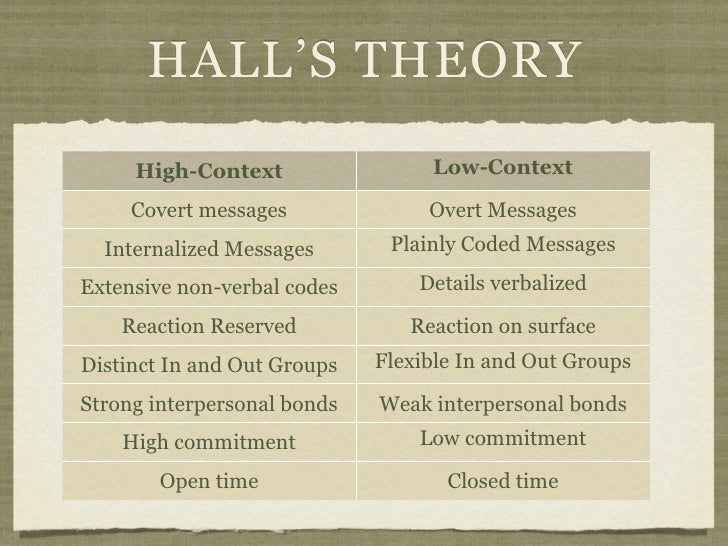
Robert’s behavior is considered as a low context culture. When bargaining with Kay, Robert has low sensory involvement. Robert would only approach Kay for a specific reason, which is to request for an 8 percent raise for his work unit.
He prioritizes his demands over the relationship of his colleague. His outward personality comes off as oppressive and rude(weak interpersonal bonds). By going extreme lengths to get what he wants, he might jeopardize his standing in the organization.
 Keith Lim
Hey Keith, I like how you bold words to emphasize the key points in this scenario. The model that you have about the conflict handling is very helpful in understanding what each of the handling style is about as it is very straight forward. Your way of explaining the situation of how the bargaining approach is very interesting too. It allows me to understand the different bargaining approach style. Robert lacking positive tone is something i agree as he even threatens to call the union if Kay does not agree with the pay raise. Overall great post and I am looking forward to your next one.
LikeLike
Hi Keith,
Great job on the post! It was helpful that you explained the different conflict-handling styles and also how you further explained the disadvantage that one would be at with the collaborating style. It definitely allowed me to gain more perspective. I also appreciated how you made a reference to the photograph in your explanation on Robert being on the ‘win’ side and going on to explain the aim of such a bargaining approach. Your attention to detail on how Robert’s tone and inflexibility contributed to the conflict also helped me to better comprehend how interpersonal communication could be applied to the scenario.
Thank you for sharing! ☺️
LikeLike
Hey Keith.
Interesting write up regarding the case study! I definitely agree that Robert’s issue of not properly listening is a great barrier in their discussion. It’s funny how something that most people see as a simple thing, just listening, is actually more complex that they think. People probably tend to mix up hearing and listening! If you actually listen, you would be able to give feedback and have an actual discussion and resolve any potential issues you may be having! Hopefully people start to understand this and actually listen to each other so situations like this case study don’t happen again!
Looking forward to your next post!
LikeLike